
IUF – Leibniz Research Institute for Environmental Medicine is an independent, non-profit research institute based in Düsseldorf, Germany. IUF has been a member of the Leibniz Association since 2011. The institute is jointly funded by the federal and state governments and investigates how environmental influences contribute to disease, which biological mechanisms are involved, how different exposures interact, which population groups are particularly vulnerable, and how harmful environmental impacts can be prevented or mitigated. IUF focuses on globally relevant environmental stressors, including solar radiation, air pollution and selected chemical exposures, as well as their interplay with climatic factors, and studies their effects on the lung, skin, nervous system and immune system. Its interdisciplinary research integrates expertise from epidemiology, toxicology, immunology, molecular ageing research, bioinformatics and biostatistics. In addition, IUF is strongly engaged in the development of human-relevant alternatives to animal testing and contributes to teaching, scientific meetings, conferences and national and international research collaborations.

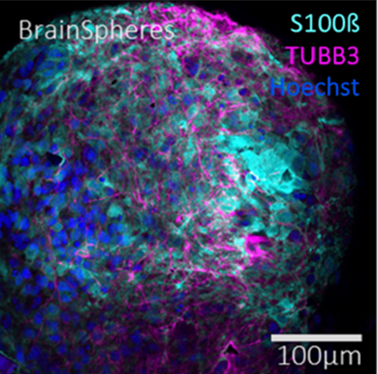
As a consortium partner in CHIASMA, the junior research group “Environmental toxicants and the brain”, led by Dr. Katharina Koch, contributes expertise in the development, application and scientific validation of human cell-based new approach methodologies (NAMs) for neurotoxicity assessment. The group focuses on developmental and adult neurotoxicity and uses NAMs both for chemical hazard assessment and for generating mechanistic evidence on modes of action, life-stage-specific susceptibility and disease-relevant perturbations. Data evaluation is supported by an established R-based biostatistical platform for concentration-response analysis and reproducibility assessment (https://crstats.github.io/). In addition to its internationally recognized developmental neurotoxicity platform, the group applies the BrainSphere model to study functional neural network perturbations and mechanisms relevant to neurotoxicity in adults and neurodegenerative disorders, thereby supporting both mechanistic interpretation and regulatory readiness of NAM-based approaches.
IUF’s Role in the CHIASMA Project
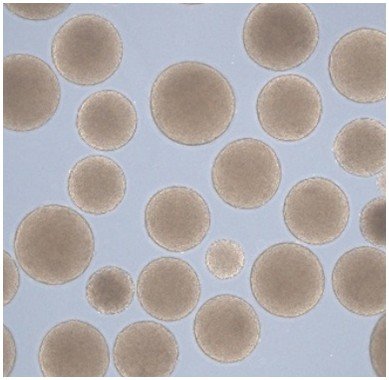
Within CHIASMA, the Koch group applies complementary 3D in vitro neurotoxicity NAMs to support chemical hazard assessment, mechanistic interpretation and regulatory readiness across the life course. Effects on key neurodevelopmental processes are assessed using the mechanistically validated Neurosphere Assay, which forms part of the OECD-recommended developmental neurotoxicity in vitro battery (DNT IVB). In parallel, hiPSC-derived 3D BrainSphere-derived neuron-glia networks are used to study adult neurotoxicity, chemical-induced neural network perturbations and mechanisms relevant to neurodegeneration using micro-electrode arrays (MEAs). As part of CHIASMA’s transferability studies, IUF will further contribute to the transfer of the DNT model and receive a blood-brain barrier model from the Austrian Institute of Technology, thereby supporting cross-laboratory implementation and broader applicability of NAM-based neurotoxicity models.
“CHIASMA provides a wonderful, collaborative platform, that brings together international scientific expertise from diverse fields across Europe, to advance next-generation safety assessment. IUF is delighted to contribute to the development of animal-free, 3R-compliant NAMs using innovative strategies in the field of neurotoxicology. By generating human-relevant mechanistic evidence, the CHIASMA platform will strengthen confidence in NAM-based toxicity testing and support their integration into regulatory decision-making for next-generation safety and sustainable assessment.”
[Dr. Katharina Koch, JRG Head, IUF]