
NMBU – Norwegian University of Life Sciences, Faculty of Veterinary Medicine is based in Ås, Norway, and combines education and research in veterinary medicine and related biomedical disciplines. As Norway’s only institution educating veterinarians, the faculty contributes expertise in animal health, animal welfare and veterinary public health. Its research spans fundamental biological mechanisms and applied approaches to understanding health and disease in animals and humans. The faculty’s facilities include FISH-VET, a dedicated infrastructure for research with model fish, supported by laboratories for physiology, andrology, cell culture and imaging. As a consortium partner in CHIASMA, NMBU contributes expertise in reproductive physiology, reproductive toxicology and endocrinology. The research group is evolving physiological research methods originally developed to study reproductive function into new approach methodologies (NAMs) for toxicity testing. The work focuses on two complementary models: a zebrafish sperm model, which examines direct effects on male gametes, and a medaka pituitary model, which investigates the effects on endocrine regulation of reproduction. Both models use in vitro and ex vivo exposures, respectively, allowing for the investigation of chemical effects under controlled conditions outside of a living animal.
As a consortium partner in CHIASMA, NMBU contributes expertise in reproductive physiology, reproductive toxicology and endocrinology. The research group is evolving physiological research methods originally developed to study reproductive function into new approach methodologies (NAMs) for toxicity testing. The work focuses on two complementary models: a zebrafish sperm model, which examines direct effects on male gametes, and a medaka pituitary model, which investigates the effects on endocrine regulation of reproduction. Both models use in vitro and ex vivo exposures, respectively, allowing for the investigation of chemical effects under controlled conditions outside of a living animal.
NMBU’s Role in the CHIASMA Project Within CHIASMA, NMBU is developing and establishing these models as tools for investigating reproductive toxicity and endocrine disruption. The zebrafish sperm model enables the study of chemical effects directly at the gamete level, while the medaka pituitary model provides an approach to examining disruption of pituitary function and reproductive hormone regulation. The models can complement existing in vivo and in vitro approaches within the OECD Endocrine Disrupters conceptual framework, and specifically the pituitary model can provide organ- and cell-specific mechanistic information, which may identify potential endocrine activity and contribute to the interpretation of effects observed at higher levels of biological organization. Together, the models address distinct but interconnected components of reproductive function, linking effects on reproductive cells with effects on endocrine control.
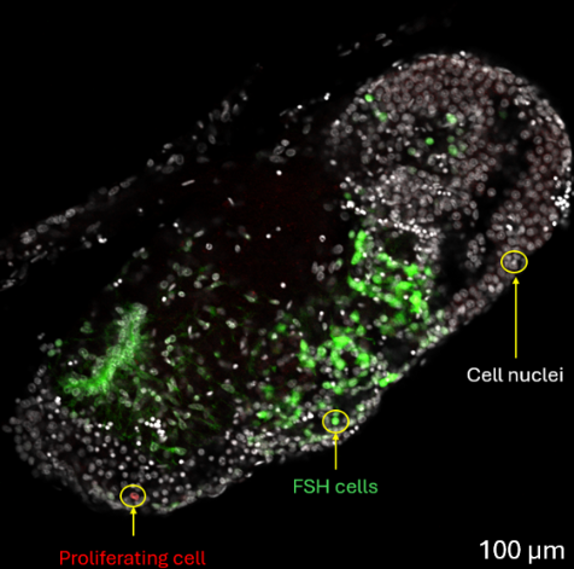
By translating knowledge from reproductive physiology into toxicological applications, NMBU aims to generate mechanistic evidence that helps explain how chemicals interfere with reproduction. The work supports the development of robust and biologically informative NAMs, with the longer-term goal of reducing reliance on live-animal exposure studies and strengthening the evidence available for chemical safety assessment.
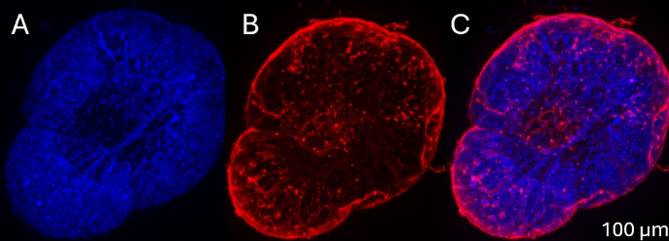
Participation in CHIASMA allows NMBU to connect expertise in reproductive physiology and toxicology with the wider scientific and methodological knowledge needed to develop NAMs for chemical safety assessment. The project provides dedicated funding, access to complementary technologies and collaboration with scientists across disciplines—resources that would be difficult to bring together within an individual research project. These opportunities enable the team to develop more advanced experimental models, explore innovative methods and evaluate their performance together with consortium partners. This support is particularly valuable for studying endocrine disruption. The endocrine system depends on finely coordinated signals and feedback mechanisms, and even small disturbances can have consequences for reproductive function. Detecting and interpreting these changes requires sensitive models grounded in a detailed understanding of physiology. Through CHIASMA, NMBU aims to strengthen the biological relevance, reproducibility and validation of its zebrafish sperm and medaka pituitary models, laying the groundwork for their further development and eventual integration into regulatory assessment frameworks.
For NMBU, CHIASMA offers a unique opportunity to collaborate with an international and interdisciplinary scientific team to transform fundamental knowledge of reproduction into practical tools for assessing chemical hazards. Working alongside the CHIASMA partners, we aim to establish reliable new approach methodologies that reduce the need for live-animal experiments, explain endocrine processes that may cause adverse health effects, and build an evidence base for their future as NAMs to be used in regulatory safety assessment.
[Dr. Mette Müller, NMBU]